
The Interplay Between Bodylock, Half Guard and High Tripod Passing
A High Level Overview of Passing Systems

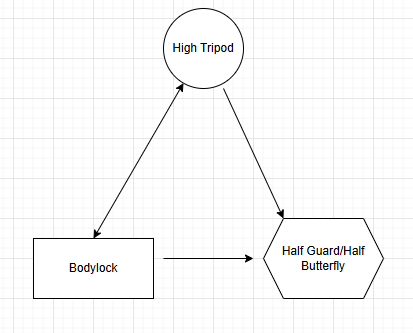
In this post, I will explore at a high level, Bodylock, Half Guard and Tripod Passing with a specific focus on how they can work together in a system to pass guards.
Purpose
By chaining together three high percentage passes, we greatly increase our chances of passing against skilled opponents. Each of these passes are fundamentally sound as they all exhibit control (pining) of our opponent over time, which is a solid prerequisite for passing to happen. Instead of looking at passes myopically, as a means to an end (passing the guard), we should instead look at them as means to other means to the same end.
Half Guard is also a premier passing position which I wrote about here. We shall now explore the aforementioned element of control in these positions.
Achieving Lower or Upperbody Superiority
All three methods of passing establish either lower or upperbody superiority before proceeding with the pass. In half guard and tripod passing, the upperbody of our opponent is controlled and pinned to the ground before we work to free our lowerbody. In bodylock passing, we achieve lowerbody superiority by pinning the butterfly hooks and controlling their hips.
The interplay between these three methods of passing happens when we can transfer from upper to lower body control or vice versa and enter the leg configurations of each passing position.
The Bodylock and Half Guard
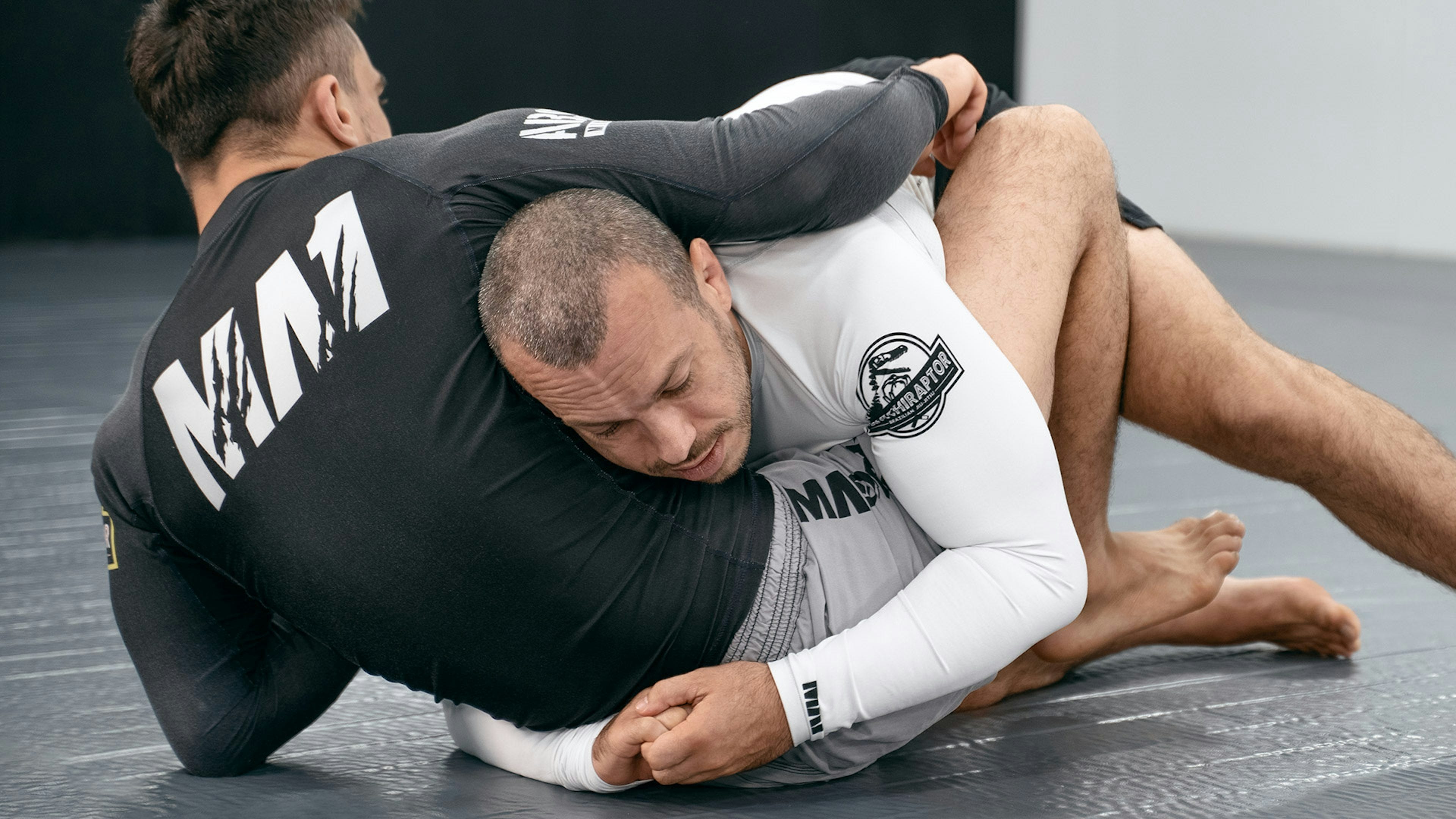
Let’s start with the body lock pass as our starting pass position. In the body lock pass we have three main ways of operating: Shelfing, Splitting and Stepping Over legs.
Shelfing
This is where we get two of our legs and pin one of their shins to their butt.
Splitting
This is where our two legs exist in between theirs and involves one of our legs pinning one of theirs to the floor in a staple like fashion.
Stepping
This is where from the starting butterfly guard position, we go to step over one of their knees in an attempt to pass quickly.
The Splitting and Stepping methods allow for us to enter into half guard or half butterfly guard which is where the interplay happens.
Let’s illustrate this with an example from Nicky Ryan
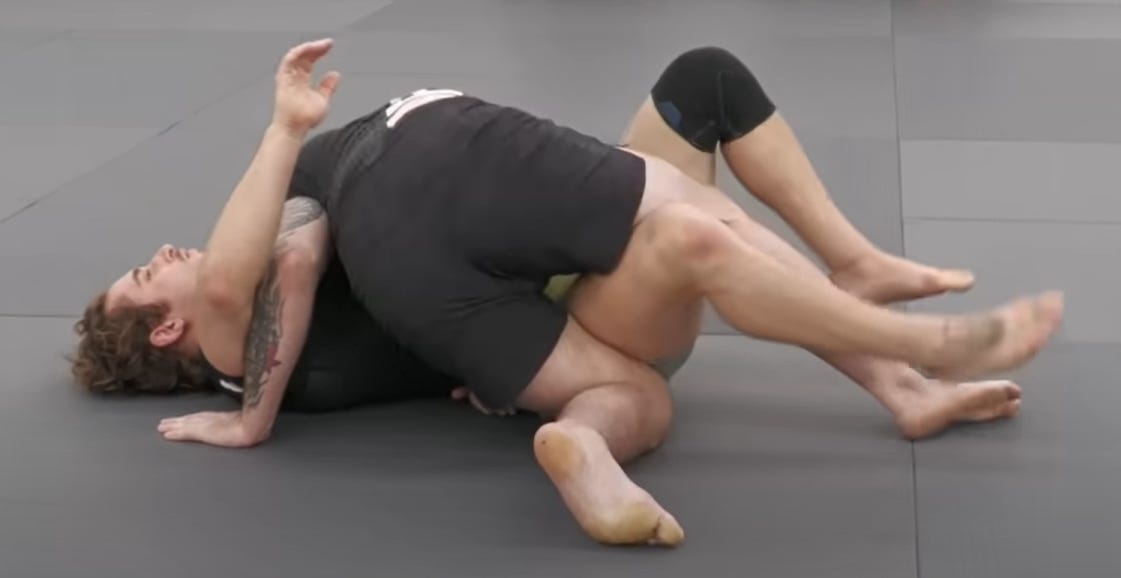
Nicky sprawls past one butterfly hook and places his right knee on the centreline (in between opponent’s feet)
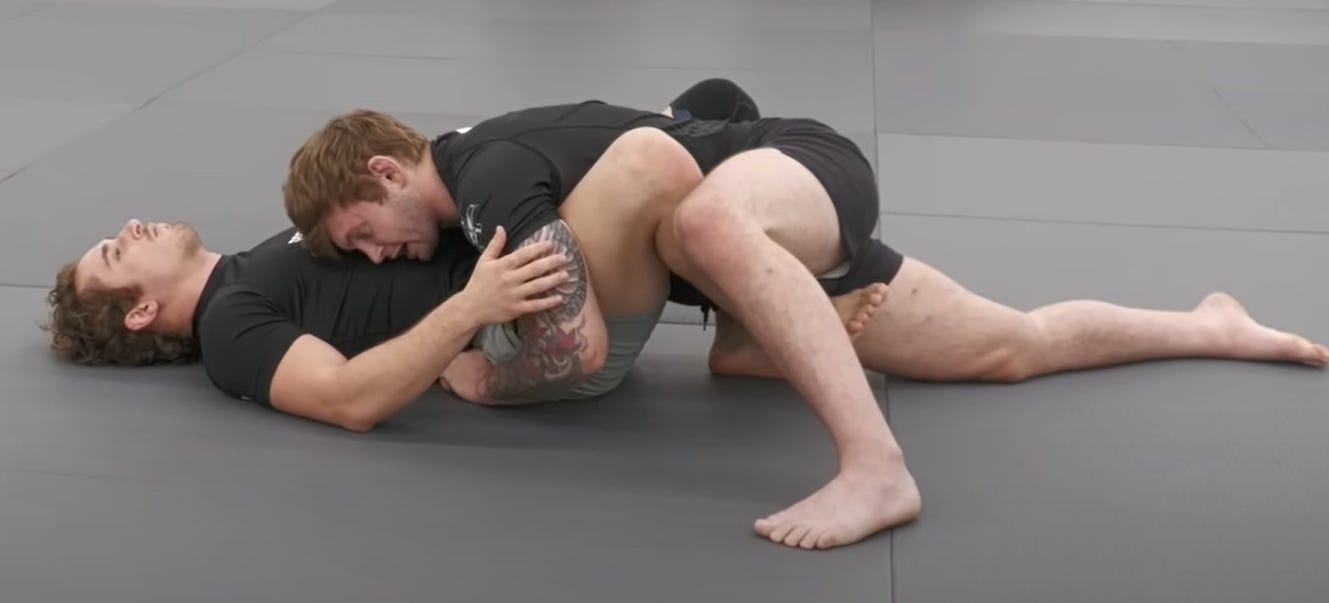
Nicky goes to step over the opponent’s knee to progress the pass but is met with a stiff arm
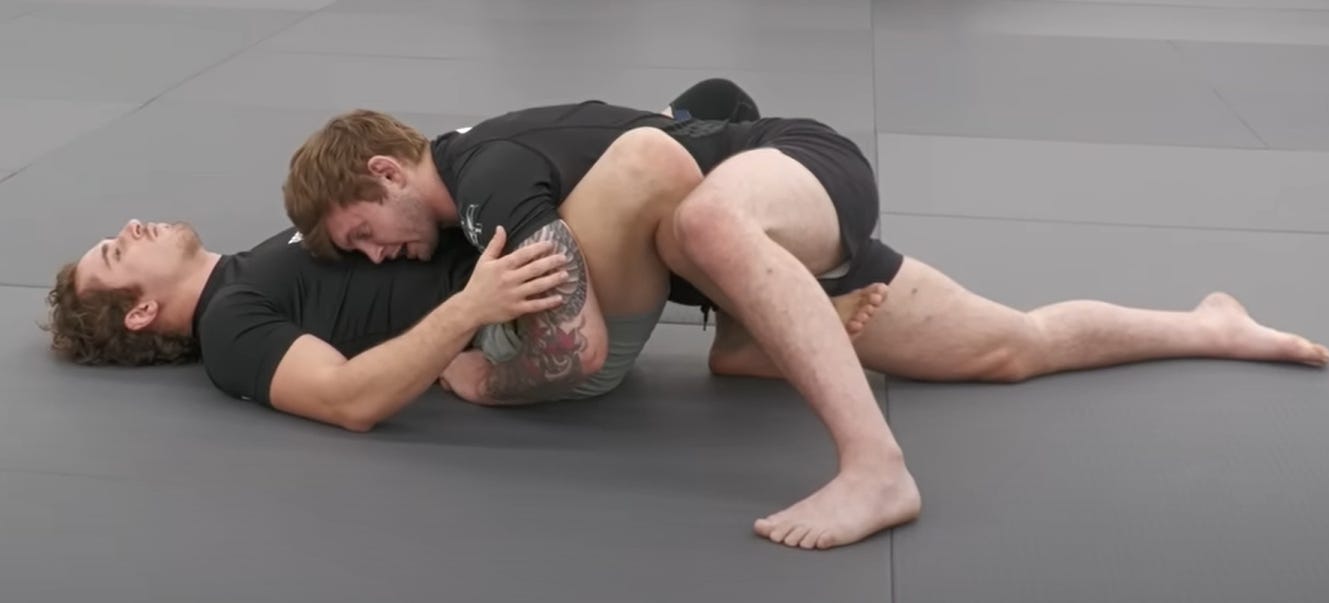
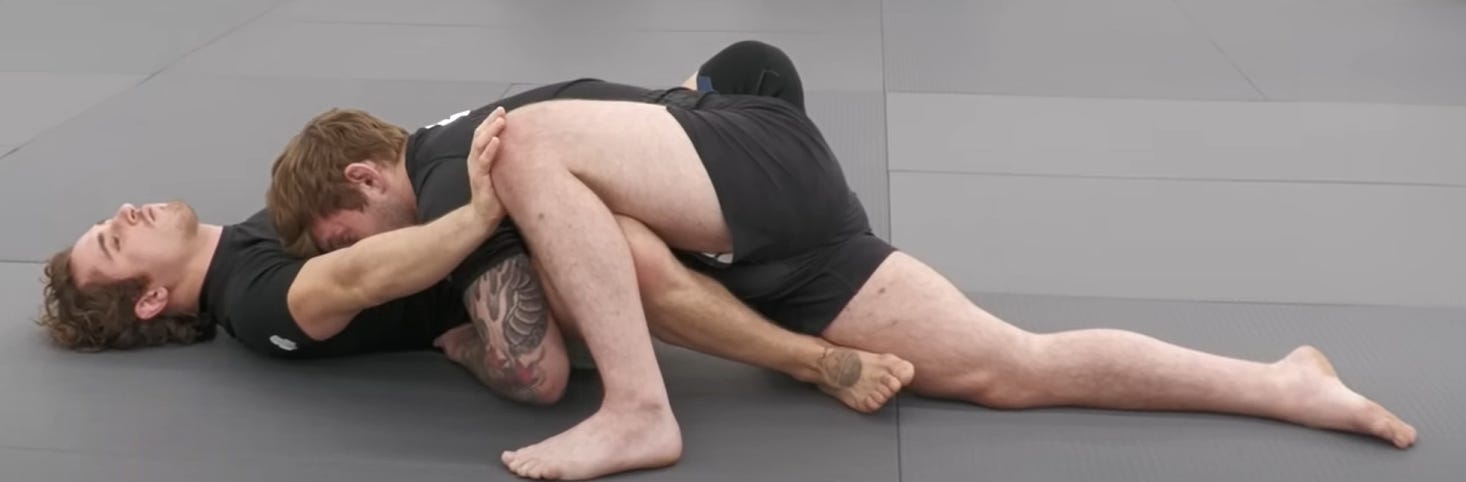
Nicky unlocks his hands and uses his left elbow to parry the stiff arm away allowing him to step over the knee while simultaneously stepping his right leg in between his opponent’s to consolidate the half guard position. Nicky essentially has a nearside underhook that he can use to start passing.
The Bodylock and The High Tripod
If you’re familiar with Jozeph Chen’s High Tripod passing, you will definitely appreciate the interplay between this and the bodylock pass. Let’s see how Gordon Ryan enters the high tripod position from the bodylock position:
Starting from the entry into the bodylock from butterfly guard, Gordon gets the grip.
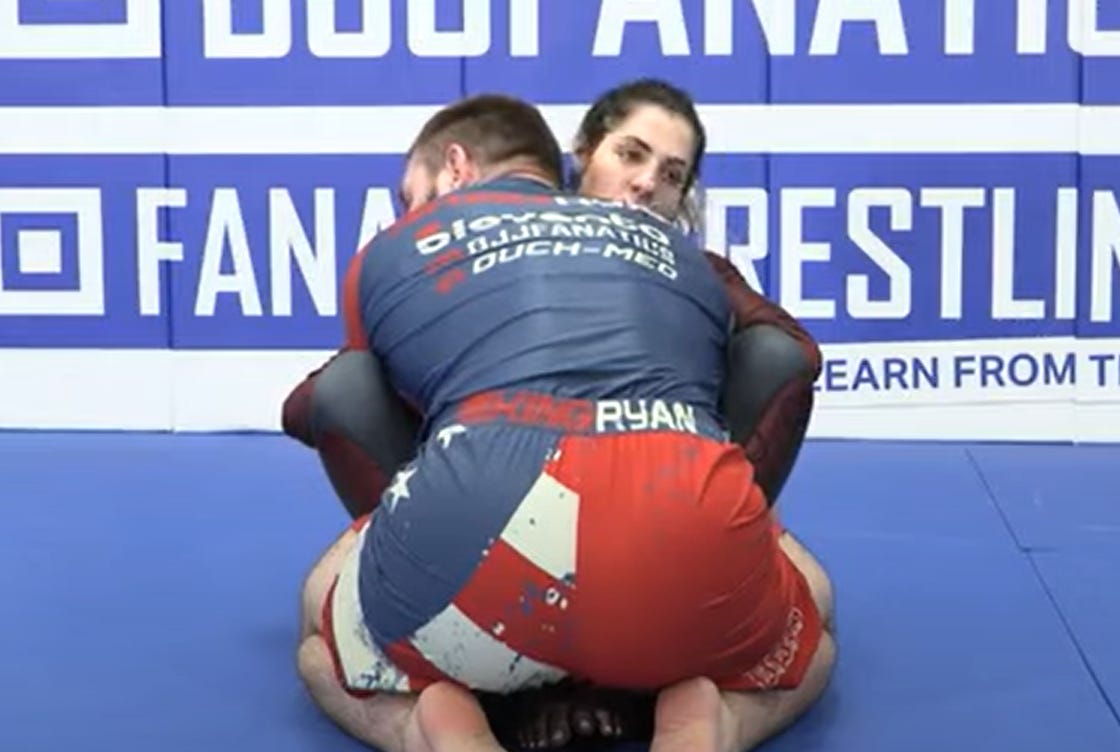
Gordon pins the upperbody to the ground and starts to raise his butt off his heels in order to start driving forward to secure the high tripod position.
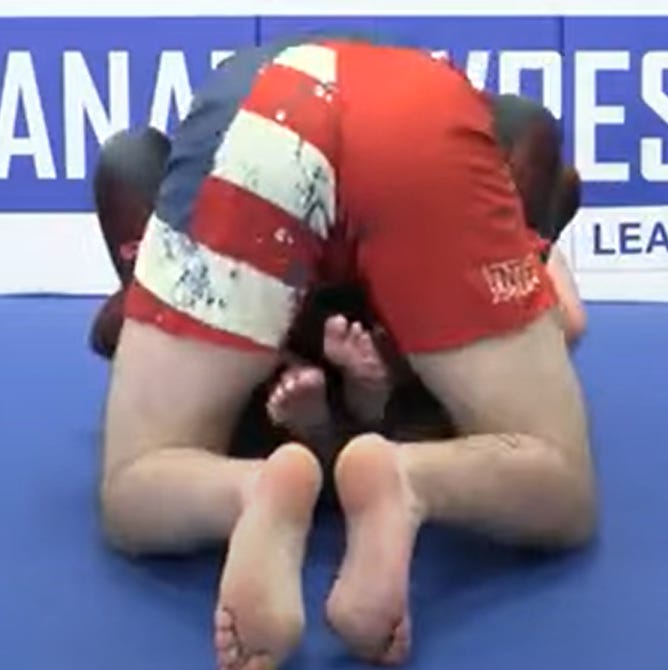
Gordon enters the high tripod position
The High Tripod and Half Guard
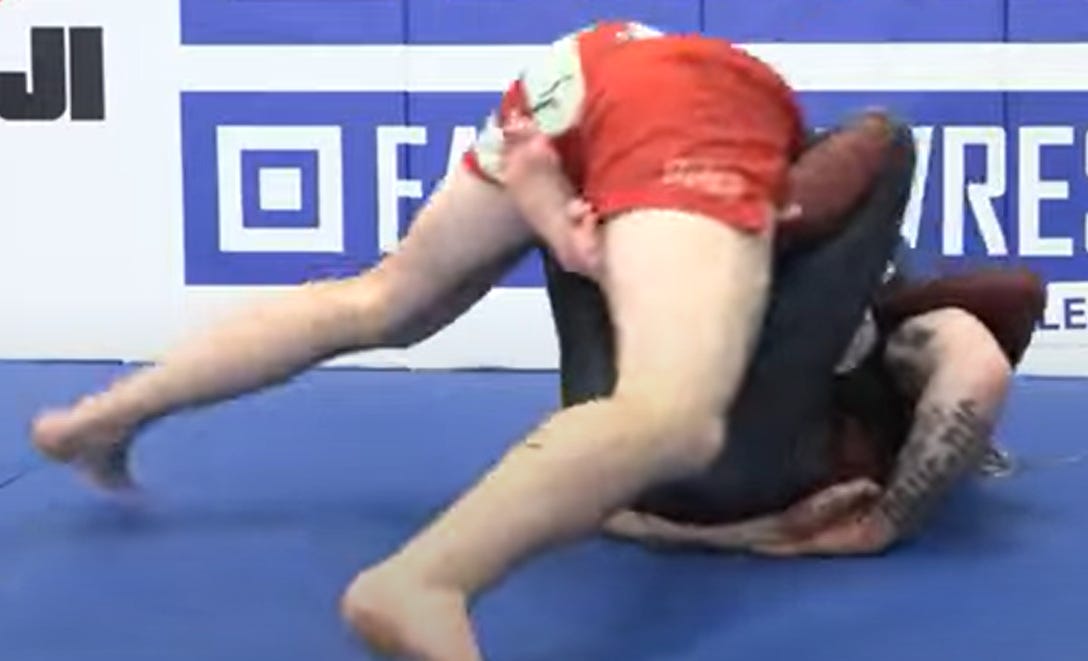
In the High Tripod Position, there are a few distinct ways of operating. One of these options is to convert the position into half guard/half butterfly.
Gordon unlocks the bodylock and uses the free arm to post on a knee.
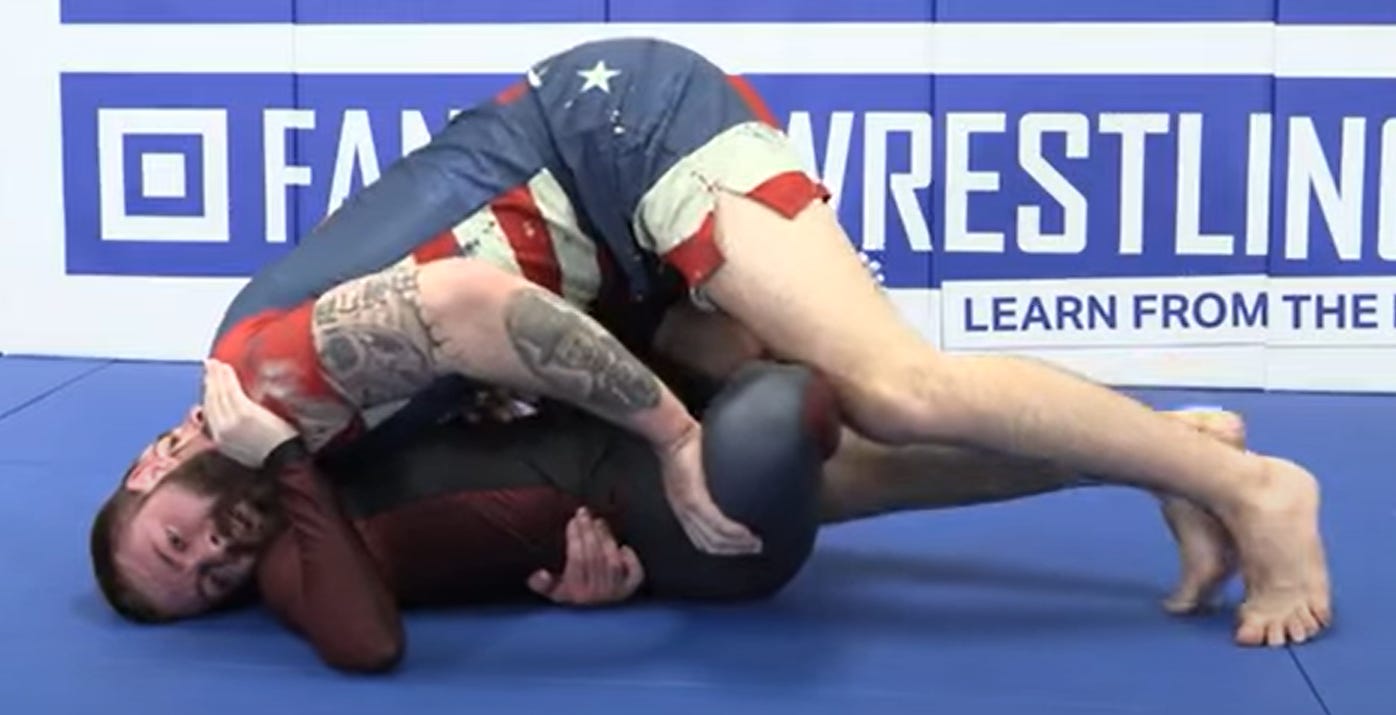
Gordon initiates a step over the knee with aid from the free arm
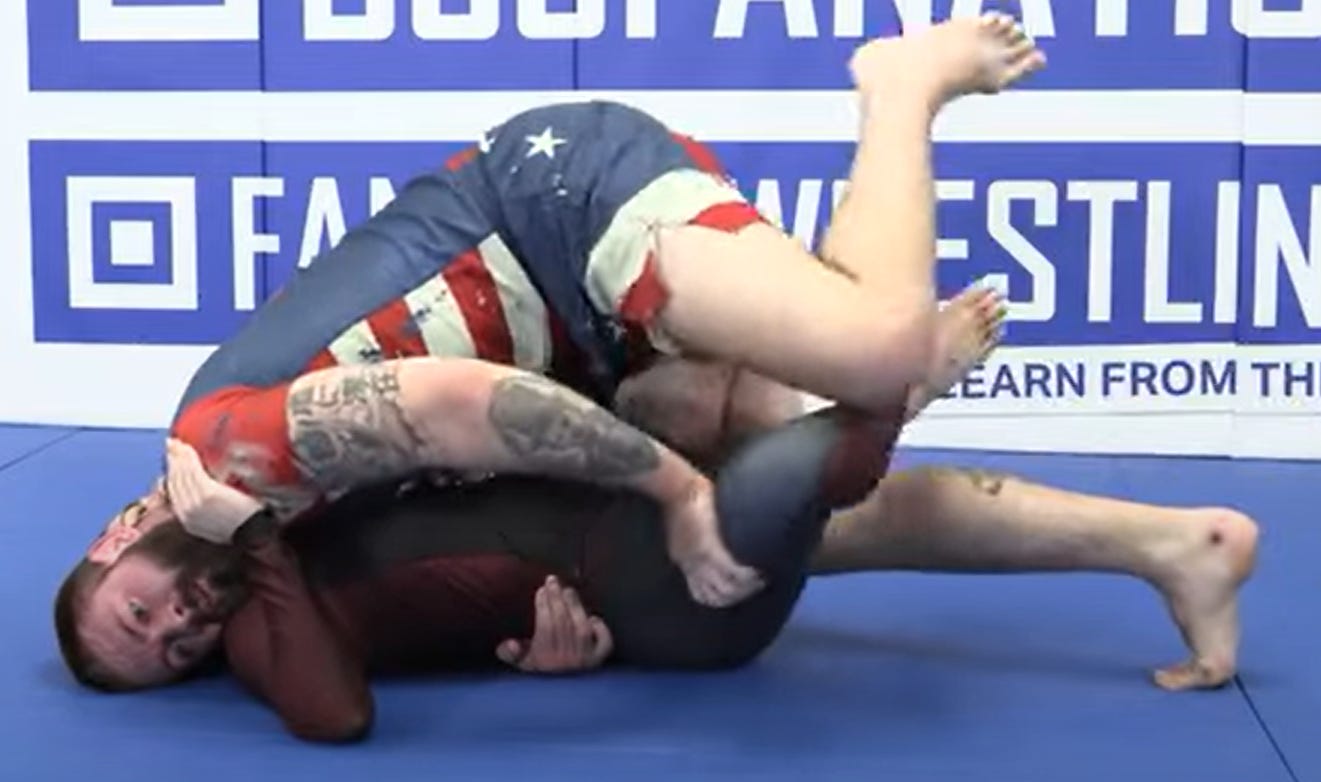
The step over results in a half butterfly position.
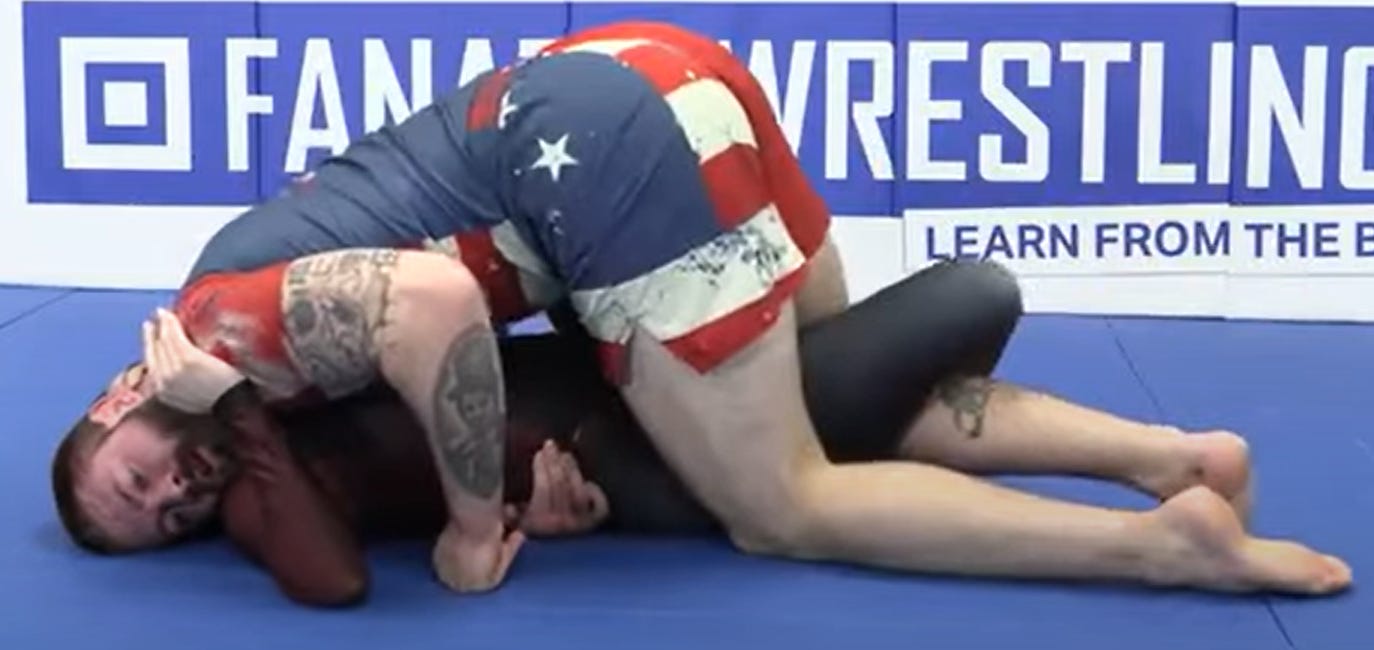
Converting Back to Bodylock and Into Half Guard
We can also use the high tripod position to do our leg work before transitioning back into the lower body lock position where we can opt back into half guard.
Gordon hip switches in the high tripod position to clear one of the hooks.
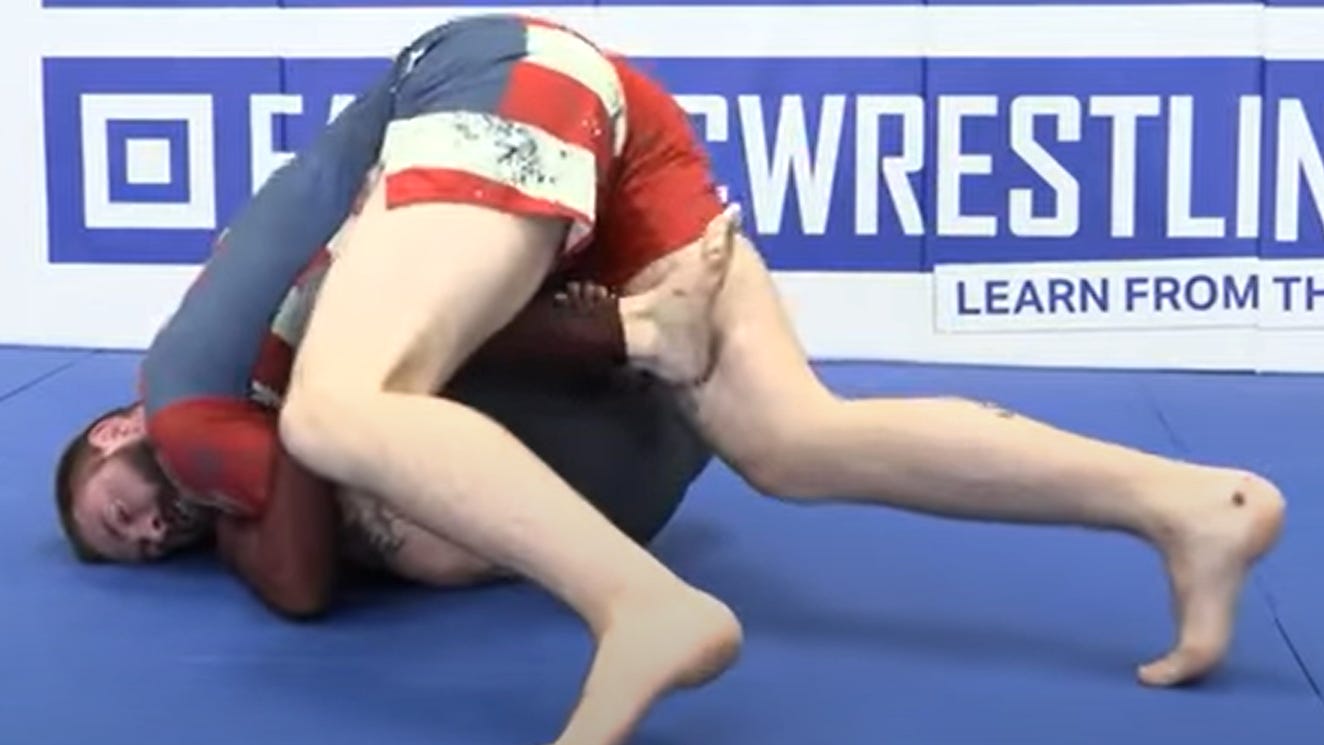
Once the sprawl is completed and the two on one shelf position is achieved, we can now convert back down to the lower bodylock position and pass from there
The Merit of Conversions
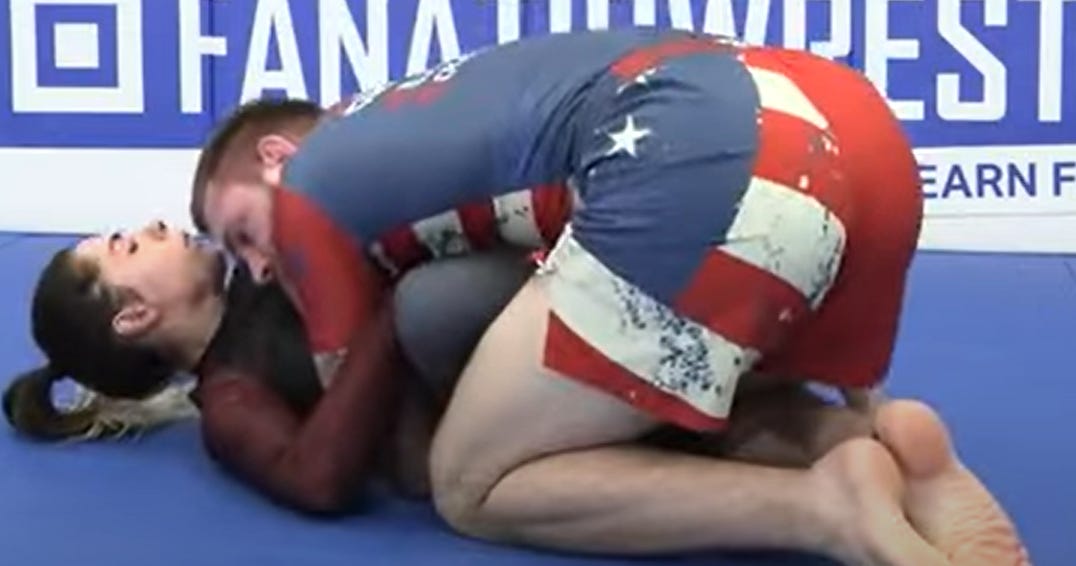
By doing all the leg pommeling stuff in the high tripod position, we are fatiguing them by placing weight onto their upperbody and they have to constantly pull knees to chest to prevent an easy pass. Another pertinent point is that our opponent is in a position where they cannot physically see what we are doing with our legs. Contrast that to the bodylock position where our opponent can see exactly where our legs are and post arms out to defend. Our head position in the high tripod is what denies them this ability to see.
Now What? Resources
Congrats!! You’re now in a great passing position and you can refer to my post here on how to operate:

The best resource on Bodylock, Half Guard and High Tripod passing will be:
Gordon Ryan’s Systematically Attacking The Guard - Bodylock Pass
Gordon Ryan’s Systematically Attacking The Guard - Half Guard Passing
Jozef Chen’s High Tripod Passing
This was insane! I'm glad I found this.